
As nonprofits look toward 2026, boards and executives are managing tight budgets, growing stakeholder expectations, and an evolving workforce that prizes values, stability, and opportunity.
DHR’s Nonprofit Practice Partners engage with sector leaders every day. In this piece, we share the emerging themes that are defining success in today’s uncertain environment—and offer insights on how boards and executive teams can best prepare for the year ahead from a talent strategy perspective. Read on for insights on strengthening leadership continuity, expanding talent pipelines, and positioning organizations for success in a time of uncertainty.
Seize Opportunities Amid Market Disruption – James Abruzzo, Vice Chairman
A pivotal moment is emerging in the nonprofit talent market. Many skilled executives from national and international organizations that have been “riffed” are seeking new opportunities, bringing broad experience and a mission-driven focus.
While financial caution remains necessary, this period allows nonprofits to make strategic hires that strengthen leadership teams for the long term. Those who recognize the opportunity and act decisively will emerge more resilient and aligned for growth. Periods of disruption often produce renewal. This one offers a chance to build capacity for the future.
Expand the Talent Lens Across Sectors – Diane Charness, Managing Partner
Sustained success often comes from thinking beyond the familiar. Nonprofits that face resource constraints and evolving missions can benefit by engaging leaders from corporate, government, or hybrid sectors who bring transferable skills and new perspectives.
When guided by thoughtful leadership assessment, cross-sector hiring cultivates innovation in operations, partnerships, and funding. The goal isn’t to replace nonprofit expertise but to complement it – blending experience and insight to advance the mission effectively. Taking a broad view of talent will be essential for nonprofits that want to adapt and grow in 2026 and beyond.
Align Bold Vision with Culture – Michele Counter, Partner
In today’s cautious labor market, candidates are approaching career moves with greater discernment. Yet, as ever, they’re drawn to nonprofits that pair a bold vision with a deep, sustained commitment to mission and culture. It’s this alignment—between aspiration and authenticity—that attracts the change-makers. This is key to recruiting future transformative leaders.
In a time of economic uncertainty, marked by budget constraints and contingency planning, bold visions can easily fall flat if not grounded in authenticity. When challenges arise, the nonprofits that stand out are those that consistently demonstrate their values. They continue to invest in staff development, cultivate inclusive leadership, and prioritize employee well-being. This sustained commitment to culture resonates deeply with purpose-driven professionals and helps organizations distinguish themselves in a competitive talent market.
Empower Adaptive Leaders to Drive Growth – Amara Kea, Partner
As funding models shift and community needs expand, nonprofit success increasingly depends on leaders who can adapt. The most effective executives balance operational discipline with creativity, resilience, and mission focus.
Building teams that embrace innovation, explore new partnerships, and diversify revenue sources ensures agility and long-term sustainability. Equally vital is developing internal leadership pipelines that prepare emerging talent for future roles.
By aligning talent strategy with organizational mission, boards position their nonprofits to evolve without losing sight of purpose.
Lead With Decisiveness and Clarity – Sara Lundberg, Managing Partner, North America
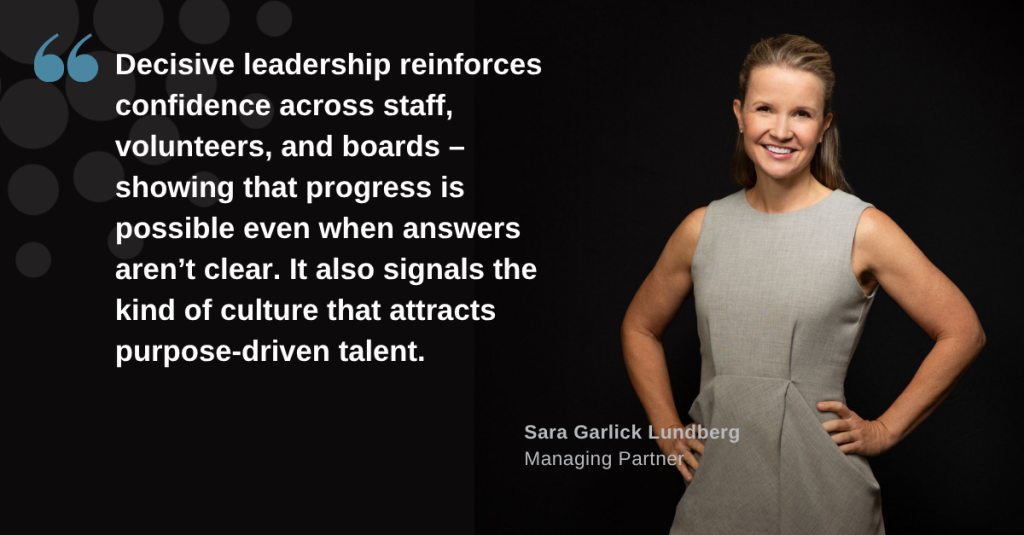
In uncertain times, forward motion depends on decision-making. When programs or funding fluctuate, organizations that continue to make thoughtful choices sustain morale, focus, and trust. It’s not about having perfect answers.
Decisive leadership reinforces confidence across staff, volunteers, and boards – showing that progress is possible even when answers aren’t clear. It also signals the kind of culture that attracts purpose-driven talent: responsive, grounded, and forward-looking. Momentum begins with decisions. Maintaining that discipline ensures readiness for whatever comes next.
Invest in Succession Planning and Leadership Development – Kris McFeely, Partner
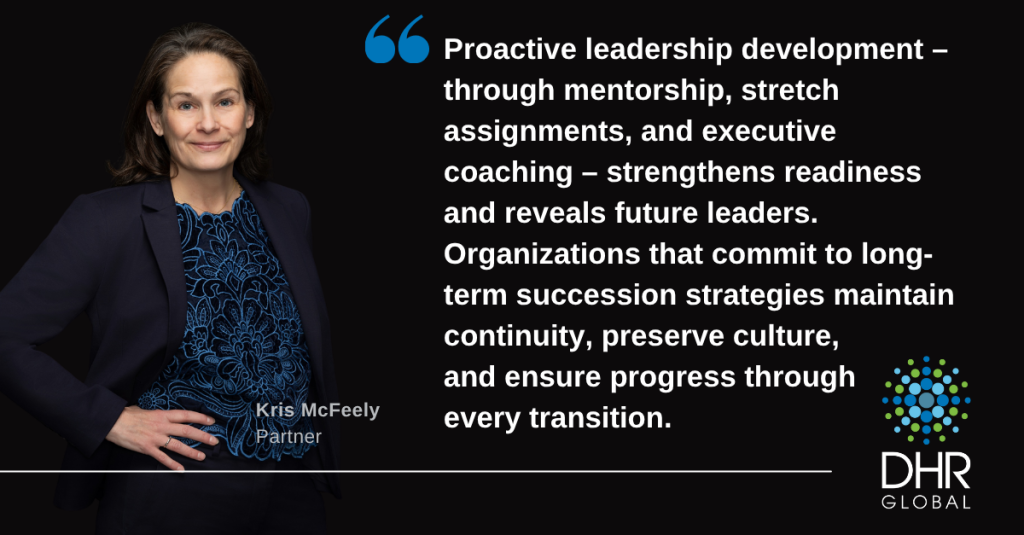
Despite its importance, formal succession planning remains rare across the nonprofit sector. Without it, leadership transitions can create instability and disrupt operations.
Board members, CEOs, and senior leadership teams should implement and regularly review succession policies for anticipated and unexpected departures, with clear interim leadership protocols. Proactive leadership development – through mentorship, stretch assignments, and executive coaching – strengthens readiness and reveals future leaders.
Organizations that commit to long-term succession strategies maintain continuity, preserve culture, and ensure progress through every transition.
Leading Nonprofits Toward Future Success
Nonprofits are operating in a period that demands conviction in leadership. Those who lead with foresight, align talent strategy with goals, and continue making decisions have the opportunity to advance their missions with strength.
Our Nonprofit Practice Partners help nonprofits ensure that the leadership decisions made today create lasting success for the future.
Learn more about DHR’s Nonprofit Practice Partners as well as our strategic talent advisory solutions.
Mission-driven Leaders for Mission-driven Organizations
Nonprofit executives are leading through a transformative era, embracing change with resilience and foresight. DHR’s Nonprofit Practice empowers organizations to harness these visionary, results-driven leaders to reach their goals.